



How Much Does a Home Gym Cost?
Building a home gym is one of the best long-term investments you can make in your health, but working out exactly what it will cost can feel overwhelming. The total depends on the type and quality of equipment you choose, the space you have, and whether you want connected technology and coaching built in. This guide breaks down the main factors so you can plan a setup that suits your goals and your budget.
What factors affect how much a home gym costs?
Several factors influence the cost of a home gym, including the type and quality of equipment, available space, the inclusion of technology or subscription services, ongoing maintenance, and accessories. Regional differences also play a role, as gym membership prices vary from place to place and influence the perceived value of home gym equipment.
Essential components of a home gym
The essential components for a home gym typically fall into three groups:
- Aerobic exercise equipment: treadmills, elliptical machines, stationary bikes, and rowing machines.
- Strength training equipment: dumbbells, kettlebells, resistance bands, squat racks, and power racks.
- Flexibility tools: yoga mats, stretching straps, and massage balls or foam rollers.
How to calculate the cost of your home gym
To calculate the cost of your home gym, consider the initial equipment outlay, ongoing maintenance and accessory expenses, and any subscription services for connected machines. Add up the cost of the individual pieces you need based on your fitness goals and the space you have available.
1. Equipment costs
Equipment cost varies significantly depending on the type and quality you choose. As a rough rule of thumb, you can spread your budget across cardio, strength, and recovery, with each category offering both entry-level and premium options.
Aerobic exercise equipment
- Treadmills: ideal for running and walking workouts. Entry-level models cover the basics, while more advanced models add interactive technology and larger displays. Treadmills tend to sit at the higher end of the cardio price range.
- Elliptical machines: these offer a low-impact, full-body workout. Higher-end models feature larger displays and more advanced tracking.
- Stationary bikes: suitable for low-impact cardio, ranging from simple flywheel models to advanced, interactive bikes. Connected exercise bikes have seen one of the largest price increases of any home cardio category over the past decade.
- Rowing machines: these provide a full-body, low-impact workout, with price depending heavily on the model's features and technology.
Strength training equipment
- Dumbbells: a versatile piece of equipment for a wide range of exercises. Fixed-weight dumbbells are usually priced per kilogram, while adjustable dumbbells save space and replace a whole rack in a single pair.
- Kettlebells: useful for explosive movements and strength training. Price increases with the weight and the quality of the material.
- Resistance bands: ideal for travel and for adding variety to strength training, with more advanced sets offering a wider range of tension.
- Squat racks or power racks: essential for barbell training. Basic models cover the fundamentals, while more stable, feature-rich racks add safety arms, pull-up bars, and attachments.
Flexibility tools
- Yoga mats: needed for yoga, stretching, and bodyweight work. Thicker mats add comfort and cost slightly more.
- Stretching straps: helpful for improving flexibility and range of motion, with price depending on the material and adjustability.
- Massage balls and foam rollers: important for post-workout recovery and myofascial release, with more durable materials costing a little more.
2. Space considerations
The space available in your home can greatly influence the cost of your gym. For smaller spaces, compact and multi-functional equipment may be necessary, which can sometimes cost more per unit of functionality because of the design and engineering involved. Larger homes can accommodate more traditional equipment, which can be more cost-effective in terms of cost per use.
3. Technology and subscription services
Interactive fitness technology is on the rise, and subscription services for connected machines add a recurring monthly fee, similar to a gym membership. Apps and online personal training sessions add further cost depending on the trainer's expertise and the intensity of the programme.
4. Maintenance and accessories
The ongoing costs of maintaining equipment, such as regular servicing, replacement parts, and accessories like mats, resistance bands, and fitness balls, should also be factored in. These costs add a modest amount to the overall expense of a home gym each year.
5. Regional price variations
It is worth noting that gym membership prices, which can serve as a benchmark for the value a home gym provides, vary considerably by region. In some cities the average monthly membership sits well above the national average. This regional variation can influence both the perceived value of working out at home and how much it makes sense to invest in your own equipment.
Home gyms for different budget ranges
- Entry-level: a basic treadmill, a set of dumbbells, resistance bands, and a yoga mat.
- Mid-range: an advanced treadmill or other cardio machine, a set of adjustable dumbbells, a squat rack, and a variety of accessories.
- Premium: a fully equipped gym with high-tech machines, a wide range of free weights, and interactive fitness technology.
How to save money when building your home gym
To keep costs down, consider the following tips:
- Buy equipment during sales, or look for used equipment in good condition.
- Start with the basics and gradually add more as your fitness needs evolve.
- Choose multi-functional equipment to save space and reduce overall cost.
- Look for equipment with financing options or payment plans.
- Consider an all-in-one smart home gym.
The concept of the smart home gym has changed the way many people exercise. These connected fitness devices provide a convenient, personalised workout experience and use technology to track performance, deliver virtual coaching, and even adjust resistance automatically during a workout.
Versatility and space-saving design
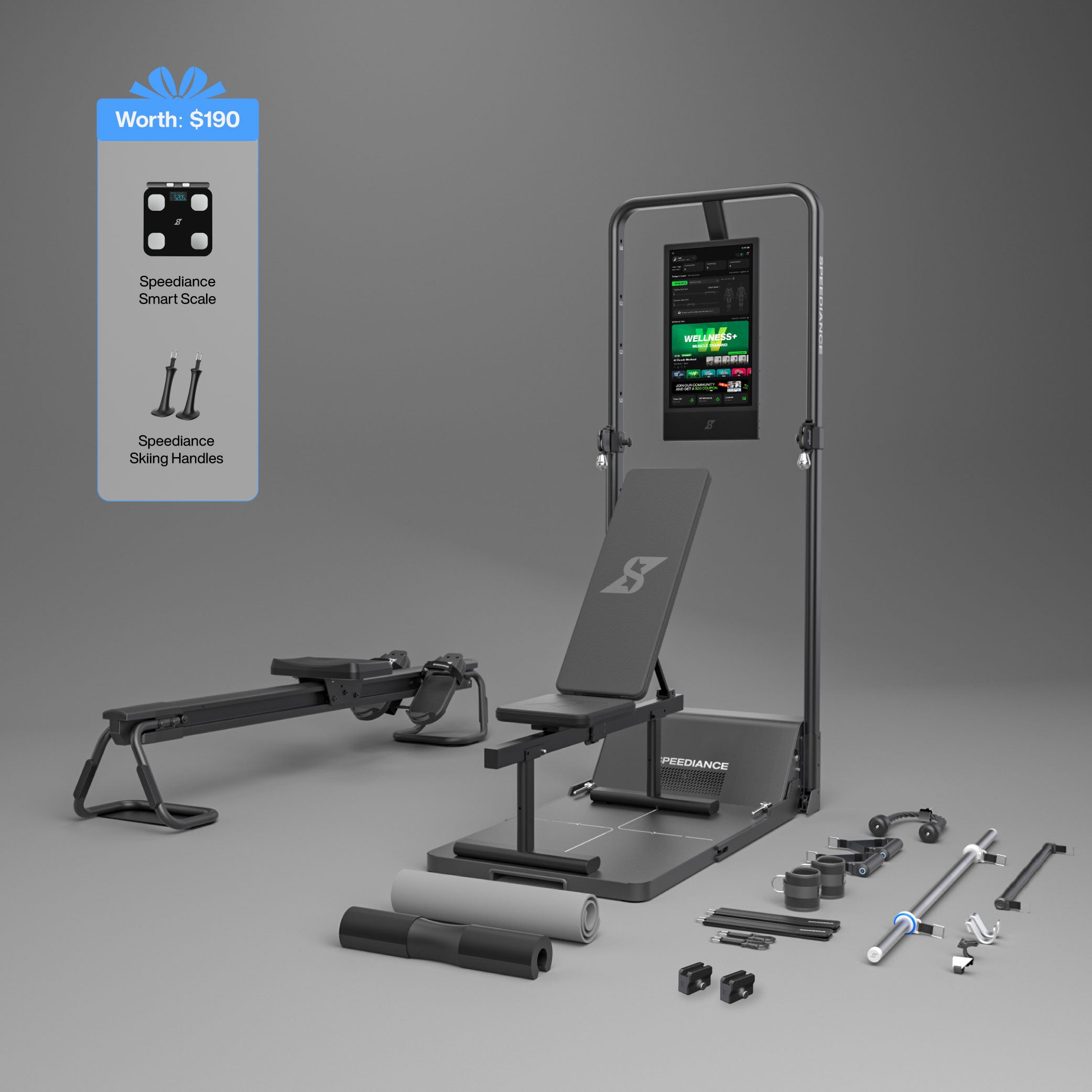
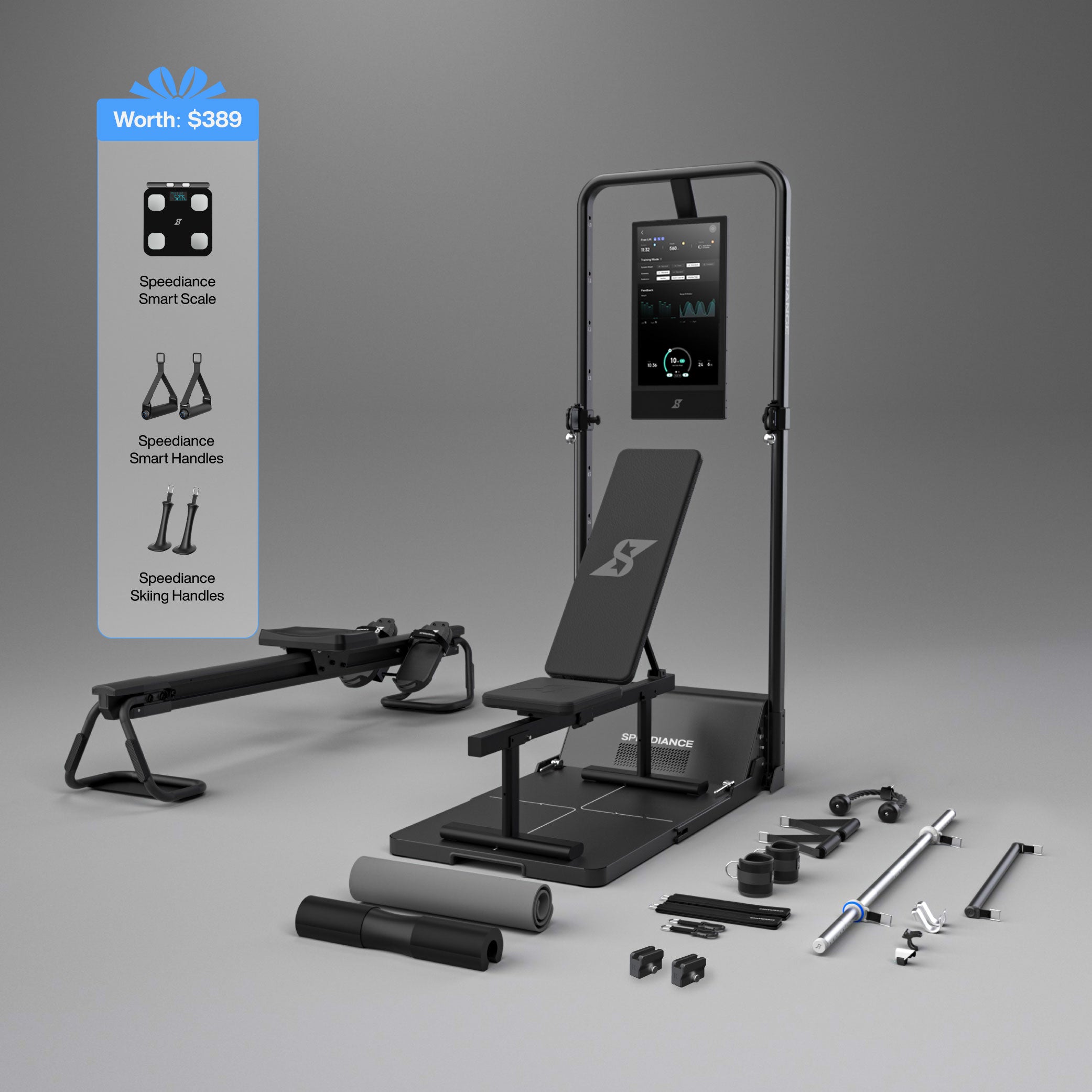
Smart home gyms such as Speediance offer a wide variety of workouts in a compact form factor. Using interactive screens and electromagnetic resistance, a single machine can deliver strength training, cardio, yoga, and more while taking up minimal space. The Speediance Gym Monster combines a weight bench, dumbbells, and a squat rack into one unit, saving floor space and providing a versatile, all-in-one workout solution.
Personalised workouts and virtual coaching
One of the most notable benefits of a smart home gym is the level of personalisation it offers. The AI technology in Speediance machines automatically adjusts resistance to provide tailored workouts based on your strength and progress. Smart home gyms also come with a library of on-demand and live classes, so it feels like having a personal trainer on call.
Technology integration and interactivity
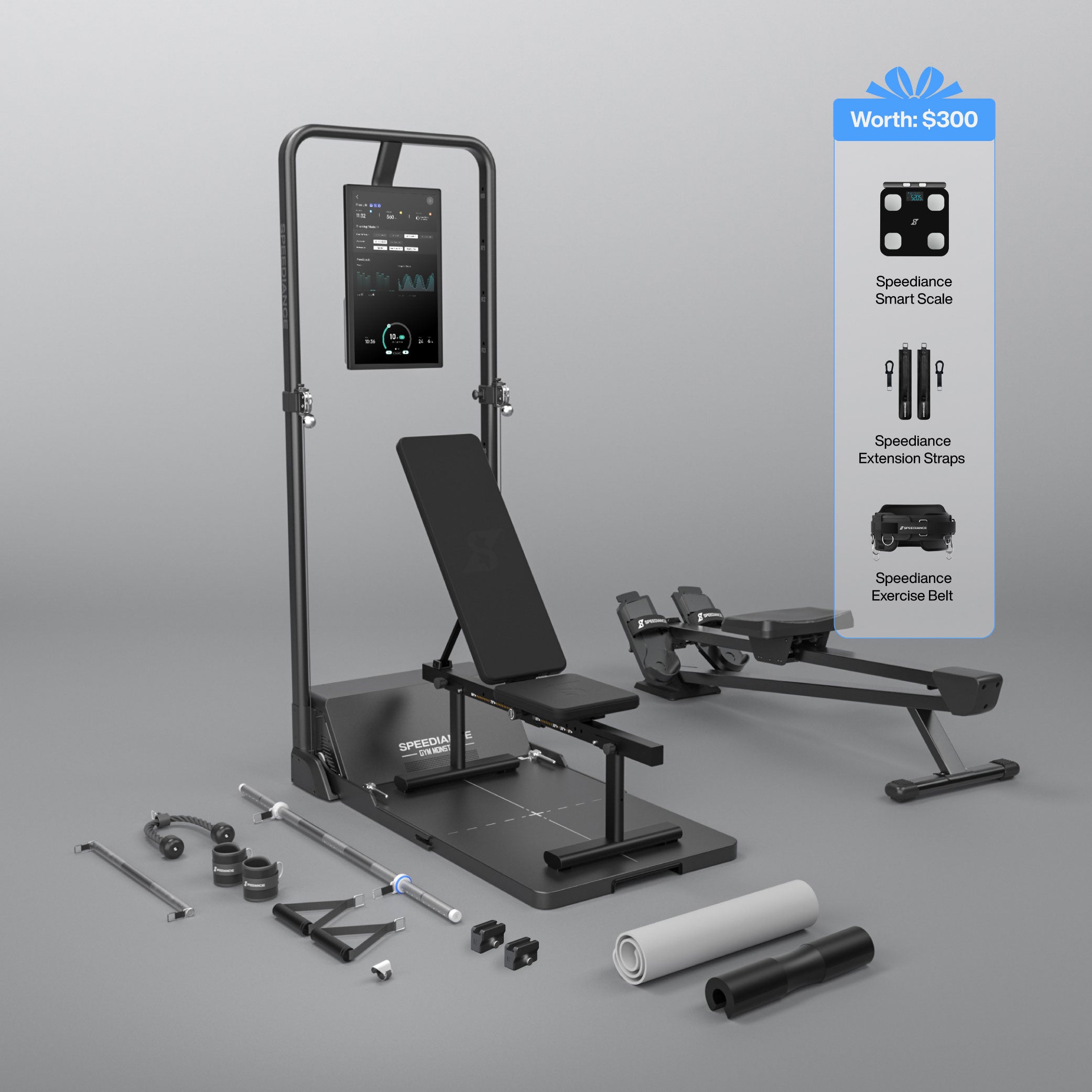
Smart home gyms bring a new level of interactivity to home workouts. Speediance devices feature a large touchscreen display, roughly 56 cm, for guided virtual workouts and track measurable performance statistics. This lets you join virtual classes, compete on leaderboards, and stay motivated through community engagement.
Health monitoring and progress tracking
Smart home gyms are often equipped with sensors and tracking capabilities that monitor heart rate, calorie burn, sleep habits, and workout performance. This data provides real-time feedback and personalised recommendations, enhancing the overall workout experience.
Market growth and consumer interest
The smart home gym equipment market is expected to grow significantly over the coming years, driven by increasing health awareness, a continued shift towards home fitness, and ongoing technological advances.
Challenges and considerations
While smart home gyms offer many benefits, they also come with considerations, such as a higher initial cost and the need for a reliable internet connection for full functionality. It is also worth thinking about your available space, the types of workout you prefer, and your budget when choosing one.
What are the benefits of creating a home gym?
Creating a home gym offers numerous benefits, including:
- Convenience: access to your equipment any time, without the need to travel.
- Cost savings: while commercial gym fees recur every month, the initial investment in a home gym can lead to substantial savings over time, especially when the whole household can use the same setup without additional membership fees.
- Privacy: work out in the comfort of your own space, without distractions.
- Flexibility: customise your workout environment to suit your preferences.
- Health: encourages regular exercise by removing barriers to fitness.
Conclusion
In summary, the cost of a home gym can range from a modest setup with a few essentials to a fully equipped, high-tech space. The exact figure depends on your fitness goals, available space, appetite for connected technology, and willingness to invest in quality equipment and services. It is also worth weighing the flexibility and convenience a home gym provides, both of which can make a real difference to long-term fitness consistency and success.
If you want a versatile, space-saving setup that combines strength, cardio, and coaching in one machine, explore the Speediance Gym Monster 2 and see current pricing on the product page.


